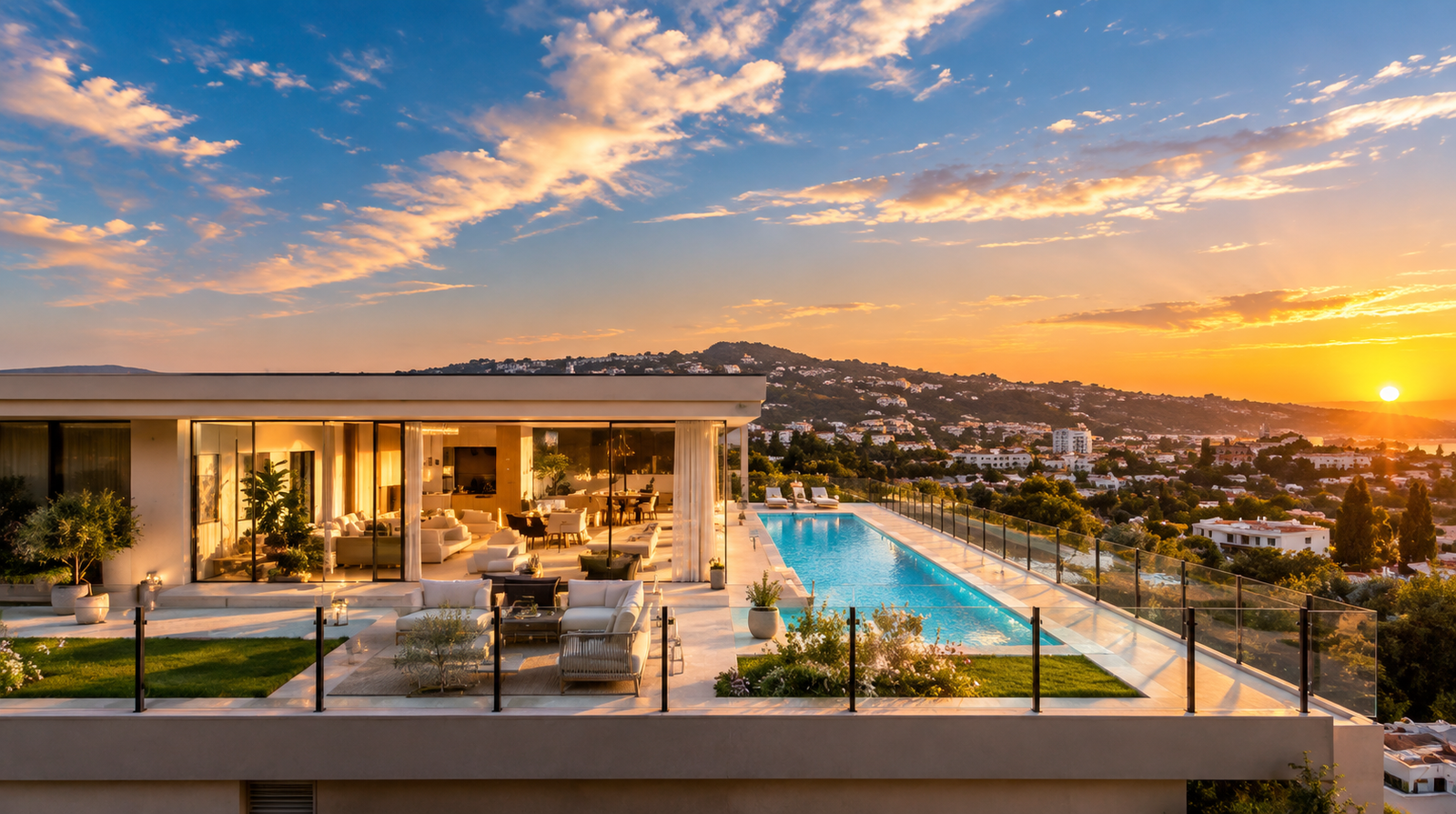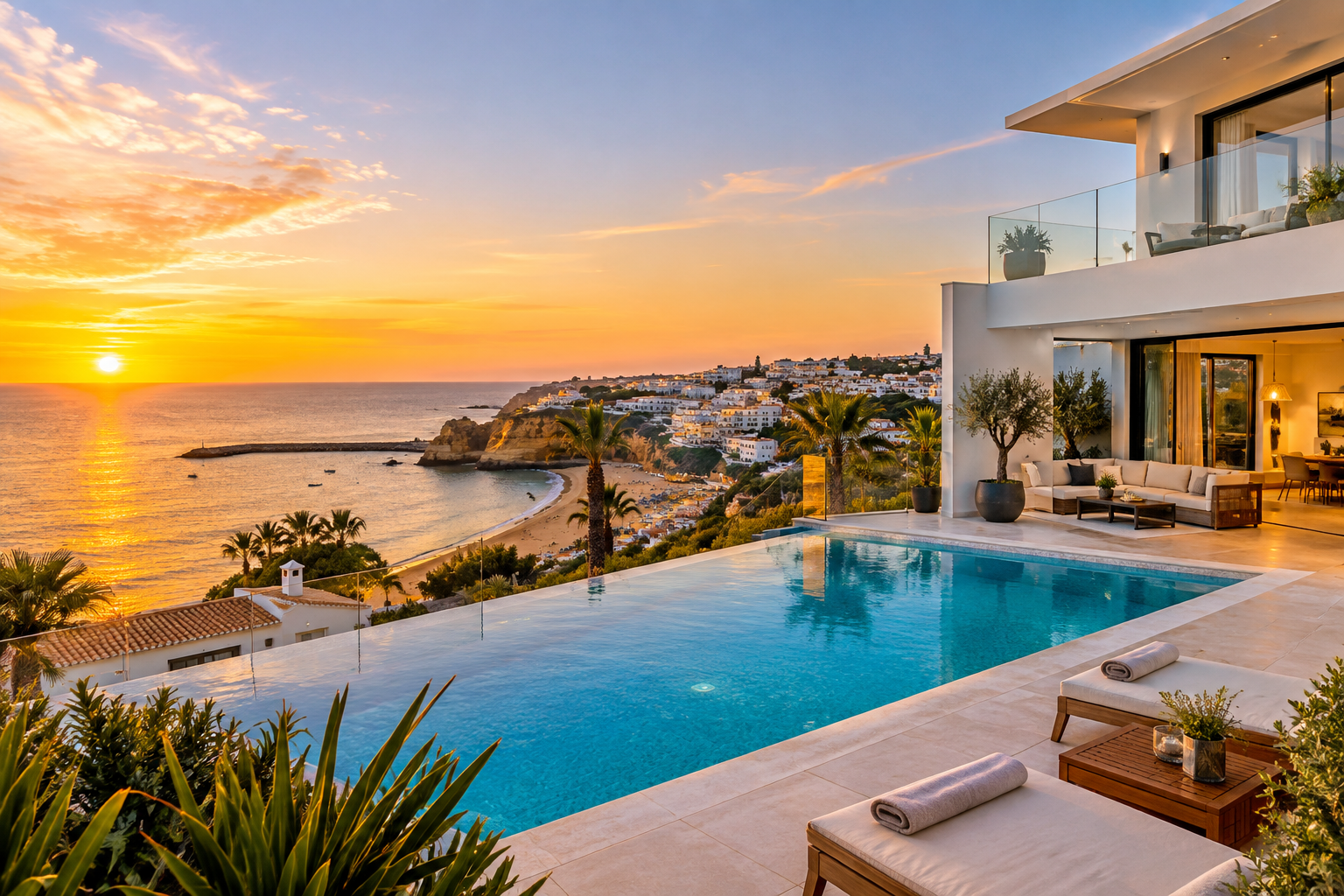
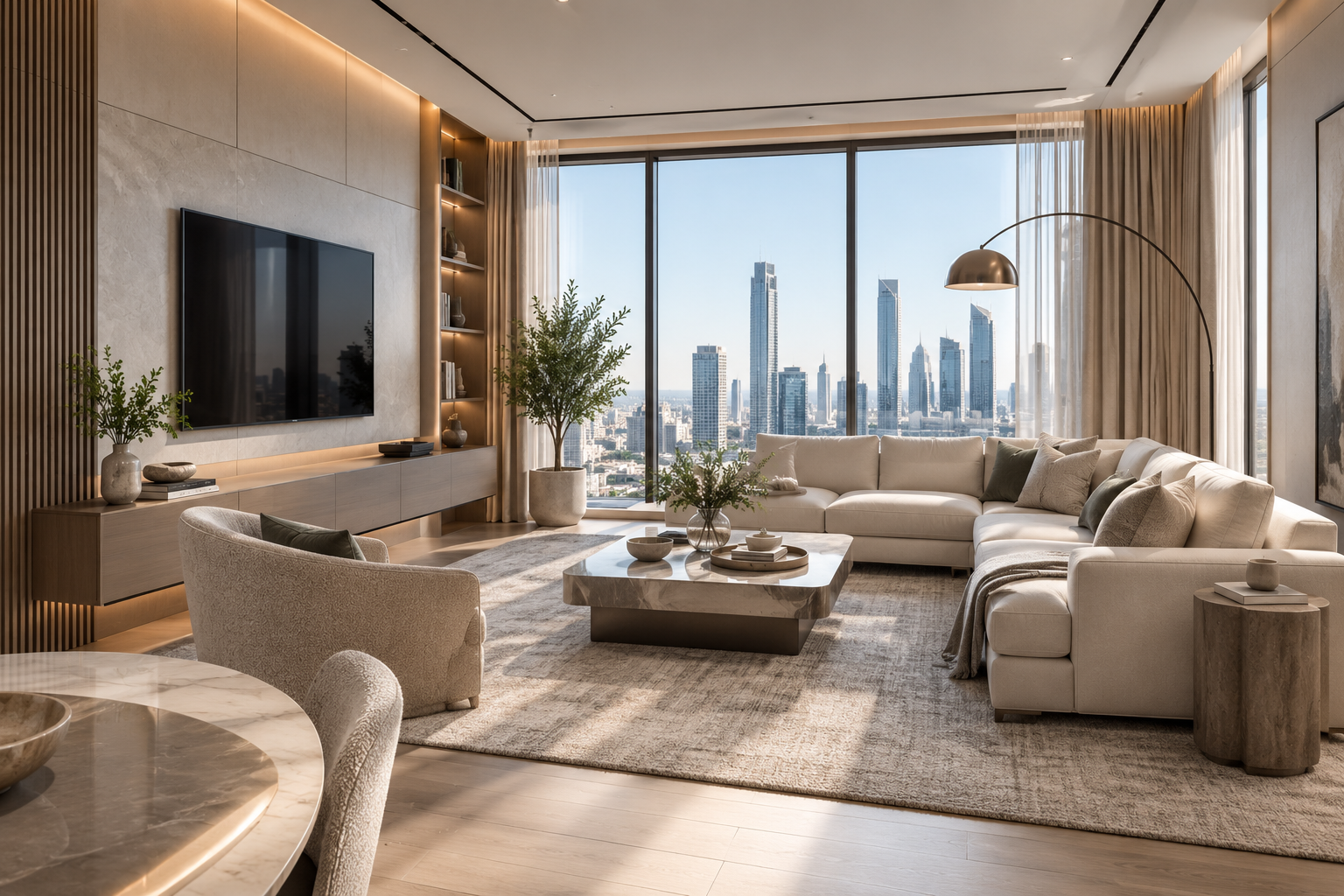
Okay so, walk into pretty much any “modern” apartment and you’ll notice it almost instantly. Doesn’t feel bare. Feels like someone actually sat there and thought about where every single thing goes. That’s basically the whole point when people talk about how to style a modern apartment. Less stuff was never really the goal, honestly. It’s about the right stuff., and knowing why that one chair or that one lamp actually deserves its spot.
Maybe you just moved in somewhere new. Or maybe, honestly, you’re just sick of a space that never comes together no matter what you try. Either way, that’s what this guide’s for, figuring out how to style a modern apartment from the ground up. Picking a direction, working out a color palette, furniture, lighting, textures, styling the living room, the dining area, all of it. Real tips, room by room, stuff you can actually go use today. I’ve noticed this myself while helping friends set up their places, the ones that actually feel finished are never the ones with the most furniture.
Start With a Clear Design Direction
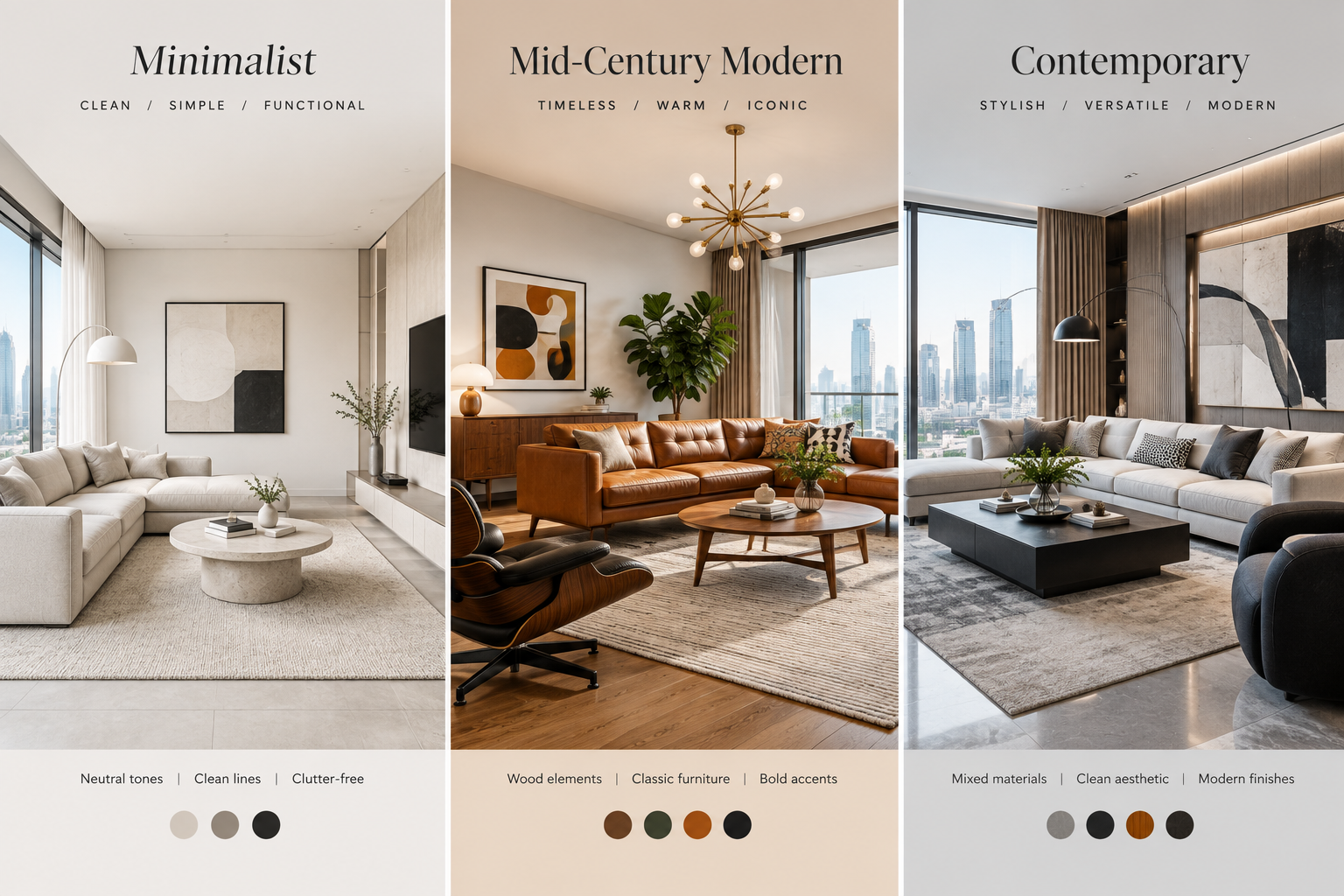
Before you even think about buying a single throw pillow, figure out what kind of “modern” you’re actually after. The word gets used pretty loosely, and it covers a few styles that aren’t really the same thing.
- Minimalist: fewer pieces, calm neutral colors, lots of breathing room. Everything in the space has to justify being there.
- Mid-century modern: warm wood tones, tapered furniture legs, low sofas, and a touch of retro charm, sunburst mirrors, geometric art, that kind of thing.
- Contemporary: sits somewhere in between, takes the clean lines from minimalism but leaves more space for texture, color, and personality.
None of it’s a hard rule. Most apartments end up mixing two of these without even trying to. But having some rough direction in mind before you start buying makes everything after that a lot easier, and keeps the final space from feeling random. In my own place, I ended up blending minimalist with mid-century, and that mix is really what made it finally feel like home.
Build a Neutral Color Palette First
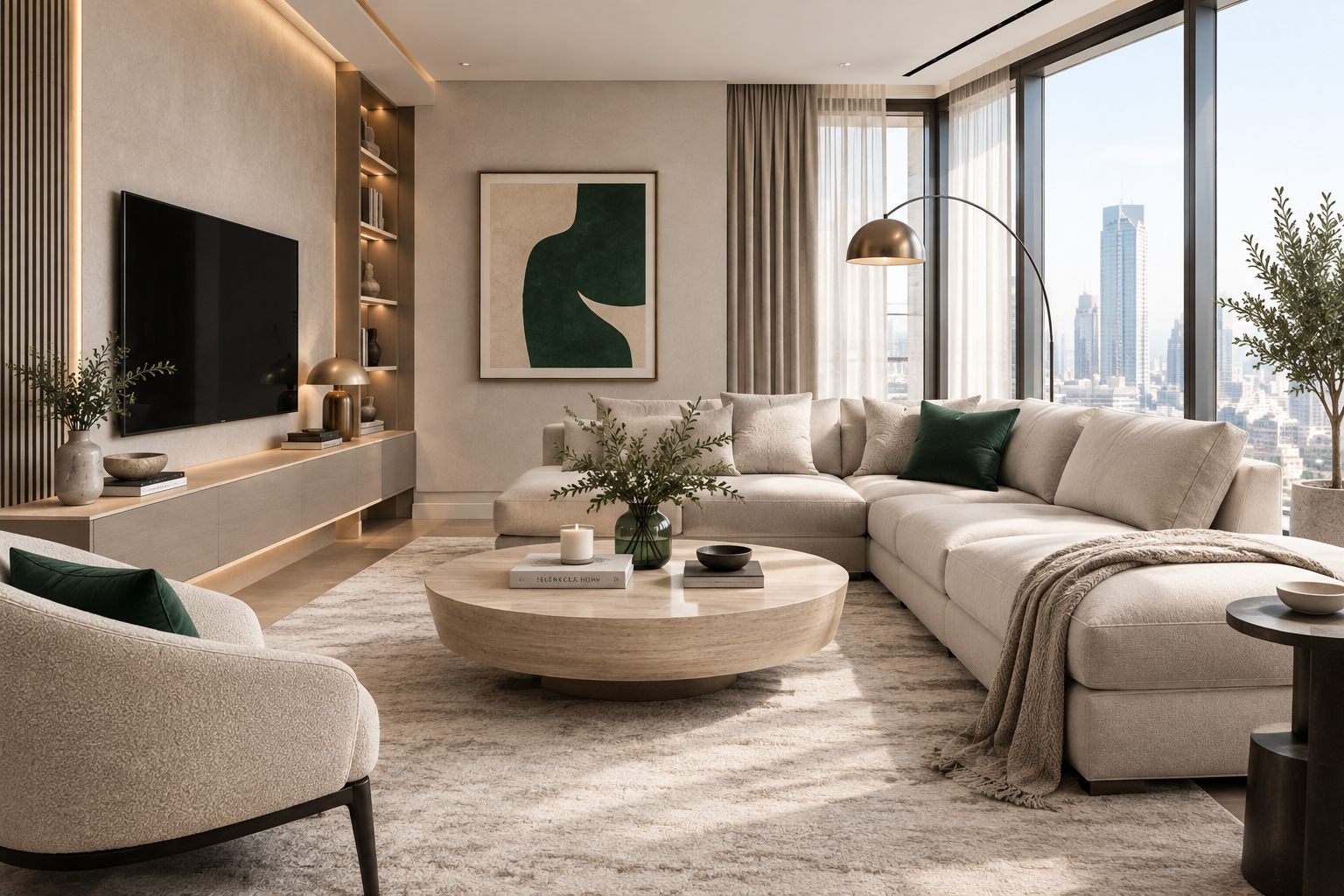
Okay honestly, almost every modern apartment that actually looks good starts the exact same way. Neutral base first. White, warm gray, beige, soft taupe, you’ve seen these everywhere and there’s a reason for that. Rooms just feel bigger, brighter, and you’re not locked in, you can bring in color whenever without redoing the whole thing. Once that’s sorted, color usually comes in through the small stuff you can swap out easily:
throw pillows, blankets
artwork, framed prints
one statement rug
maybe some ceramic vases or a decorative tray
Deep green works well here. So does navy, terracotta, muted black, all solid choices against a neutral room. But here’s the thing, hold back. Don’t go picking five different colors and scattering them everywhere, they’ll just clash. Stick to one, maybe two, and repeat them a couple times around the room instead. If you want a starting point, Pantone’s Color of the Year is usually a good indicator of where neutral and accent palettes are heading each season.
Choose Furniture With Clean Lines and a Real Purpose
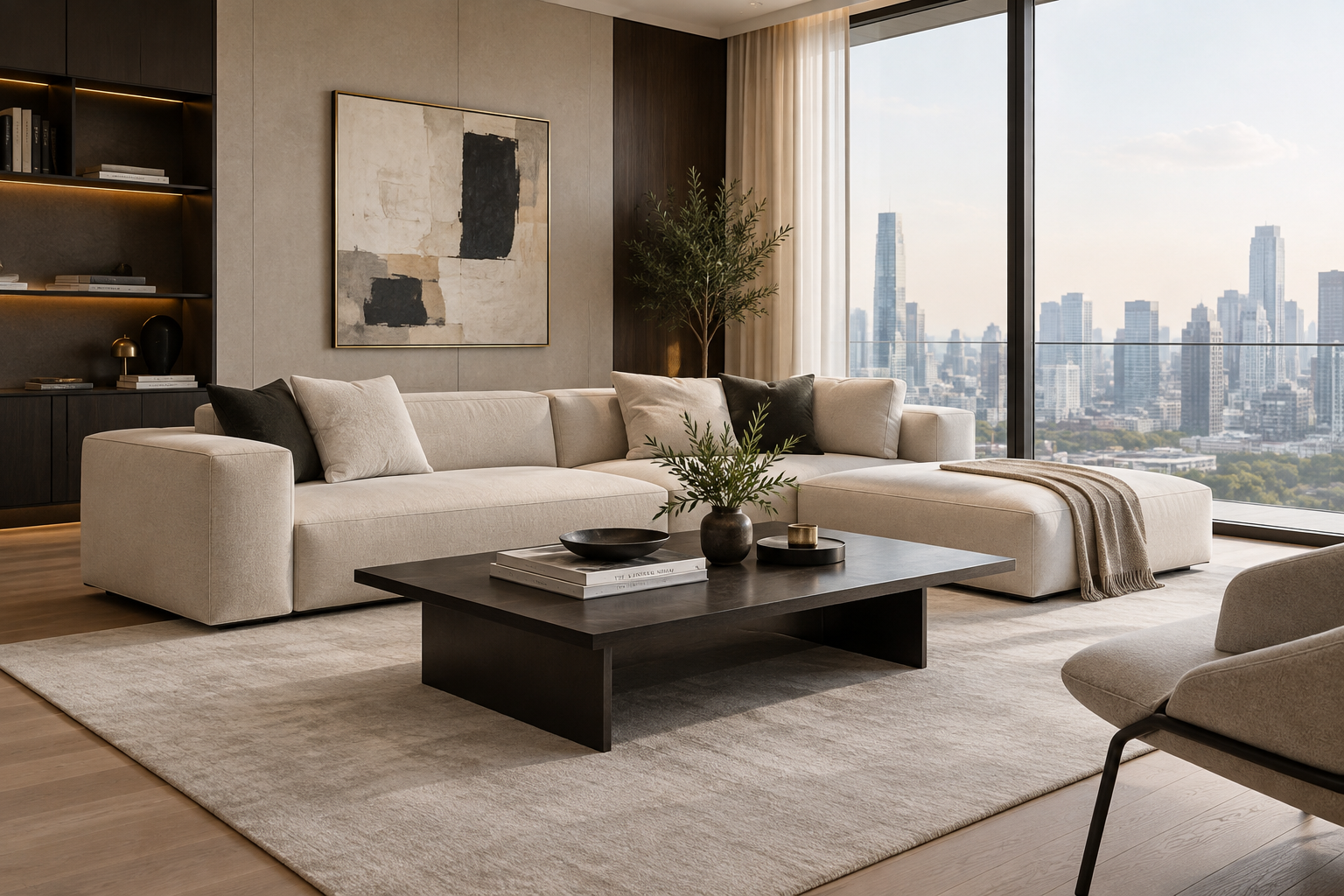
Furniture is really where most apartments either come together or completely fall apart. For that modern look, you’re generally chasing clean lines, not much ornamentation, and pieces that don’t eat up more visual space than they actually need to.
What to actually look for:
- low-profile sofas, streamlined coffee tables
- dining chairs with simple, uncluttered shapes
- furniture with tapered or slim legs (shows up a lot in both mid-century and contemporary styles)
- pieces sized for your actual room, not just for how good they looked in the showroom
Scale matters just as much as style does here. An oversized sectional crammed into a small apartment is going to make the whole room feel tight no matter how nice that sofa looked on its own, so measure first, buy after, not the other way around.
Multi-functional furniture’s worth prioritizing too, especially if you’re working with a smaller space:
- a storage ottoman that also works as a coffee table
- a sofa bed for when guests stay over
- a console table that doubles as a desk
- nesting tables you can pull out when needed and tuck away when you don’t
Layer Textures and Materials
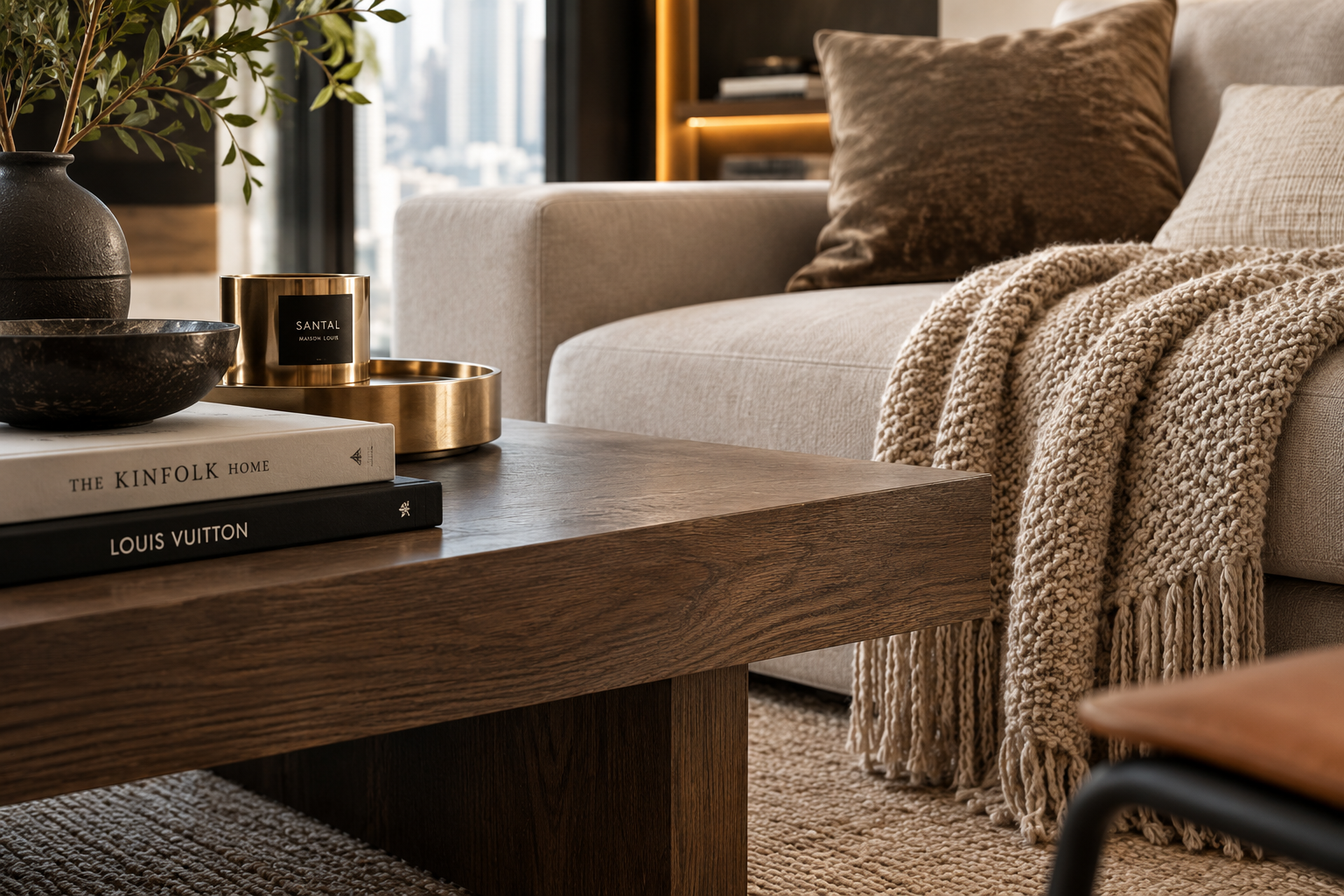
Here’s a mistake that quietly wrecks a lot of modern apartments: sticking to one texture the whole way through. All-smooth surfaces, all-neutral fabric, everything matching a little too well, it ends up feeling flat. Cold, almost. Even when every single piece is genuinely nice by itself.
Layering fixes this, mostly:
- mix it up, wood, metal, leather, soft textiles, all in one room
- wooden coffee table, metal floor lamp, a chunky knit throw thrown over the sofa, stuff like that
- a flatweave rug helps too, especially one with bound edges, sits low to the floor, works great under low-profile furniture
- ditch the heavy drapes if you’ve got them, go with ripple-fold sheers hung close to the ceiling instead, still soft, none of the bulk
Get Lighting Right
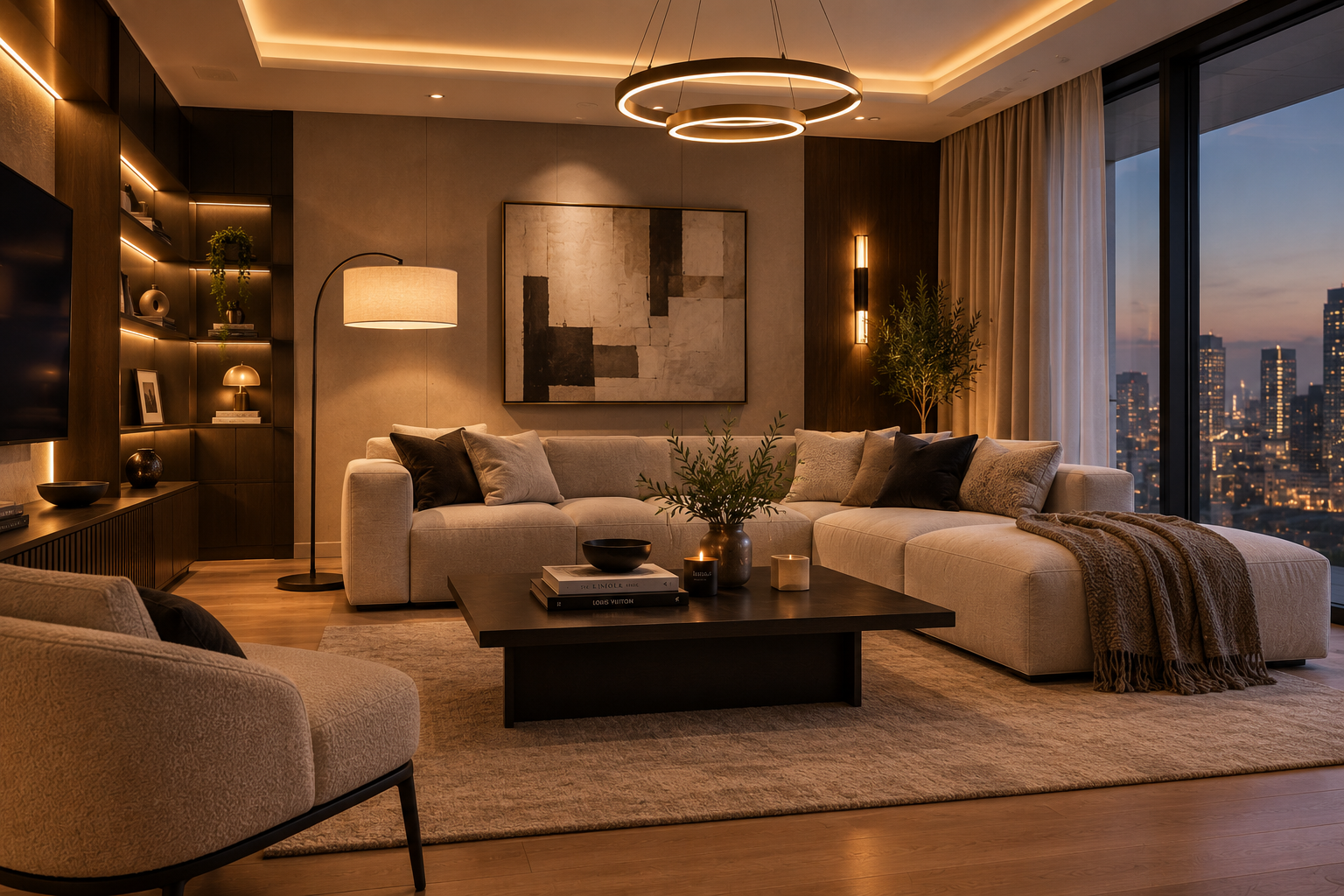
Most apartments rely way too much on one single overhead light, and honestly, you can tell. Modern spaces just feel warmer, more intentional, when the light’s coming from a few different places instead of that one fixture doing all the work.
Try layering it across three levels:
- Ambient light: your overhead or ceiling fixture, handles the general brightness
- Task light: a floor lamp or table lamp, for reading, working, whatever you’re actually doing
- Accent light: something smaller, a sconce or a little spotlight near a piece of art or a feature wall
Placement matters way more than getting every fixture to match perfectly. It’s really about where the light actually falls in the room, not how many lamps you’ve got sitting around.
Use Rugs and Layout to Define Your Space
- In open-plan or studio apartments especially, furniture placement ends up doing a lot of the job that walls would normally take care of.
- Go for a rug big enough that the front legs of your sofa and chairs actually sit on it. It creates this “island” kind of effect, splits the living area off visually from the rest of the room without needing an actual divider.
- Got one big window wall in your place? Line up shelving or seating parallel to it instead of running across it. Reinforces the room’s structure a little, and honestly the whole space ends up reading bigger, more pulled together.
- In shared living and dining areas, let the rug do the job a wall normally would, mark where one zone stops and the next one starts.
Add a Few Statement Pieces
A room that’s fully neutral, everything perfectly matched, can start feeling a little flat after a while. That’s where statement pieces come in. One bold piece of art, a sculptural light fixture, maybe an accent chair with some real character, gives the eye something to land on and adds actual personality to an otherwise minimal space.
Restraint’s the key here too, again. One or two statement pieces per room is usually enough. Go past that and you lose the calm, edited feel that’s kind of the whole point of modern apartment styling in the first place.
Styling the Living Room
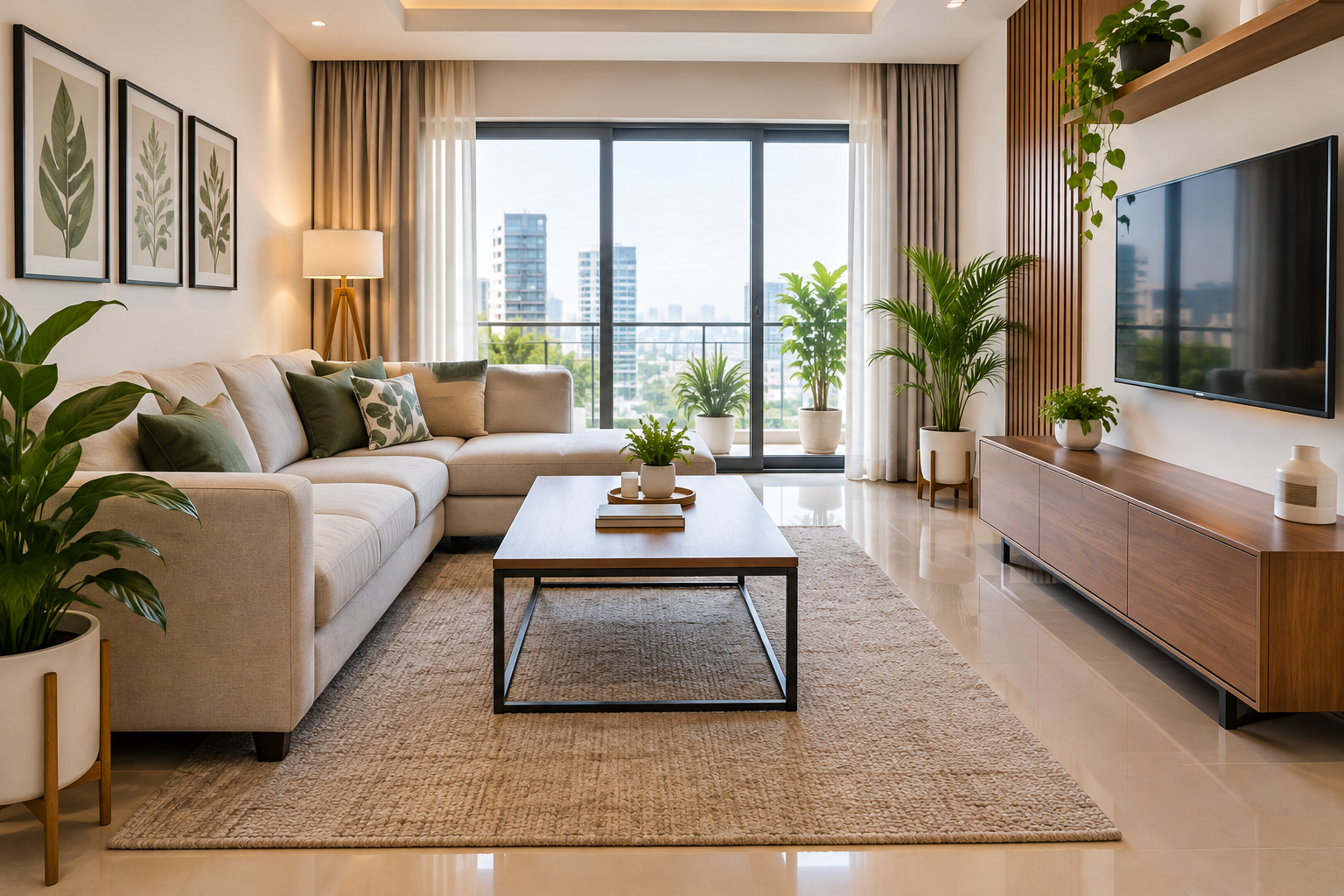
The living room’s usually what sets the tone for the rest of a modern apartment, so it’s worth putting the most effort in here.
- Arrange seating so it faces inward, toward a coffee table or a rug, instead of pushed flat against the walls. Naturally gets people talking, and the room just feels more thought-out.
- Keep surfaces fairly clear. A stack of books, one plant, a single tray for remotes or coasters, that alone usually does more for a room than a shelf packed with small objects all fighting for attention.
- Throw in one or two plants, a fiddle leaf fig or something smaller on a side table works, brings some life into the room and softens out all those clean lines a bit.
Styling the Dining Area
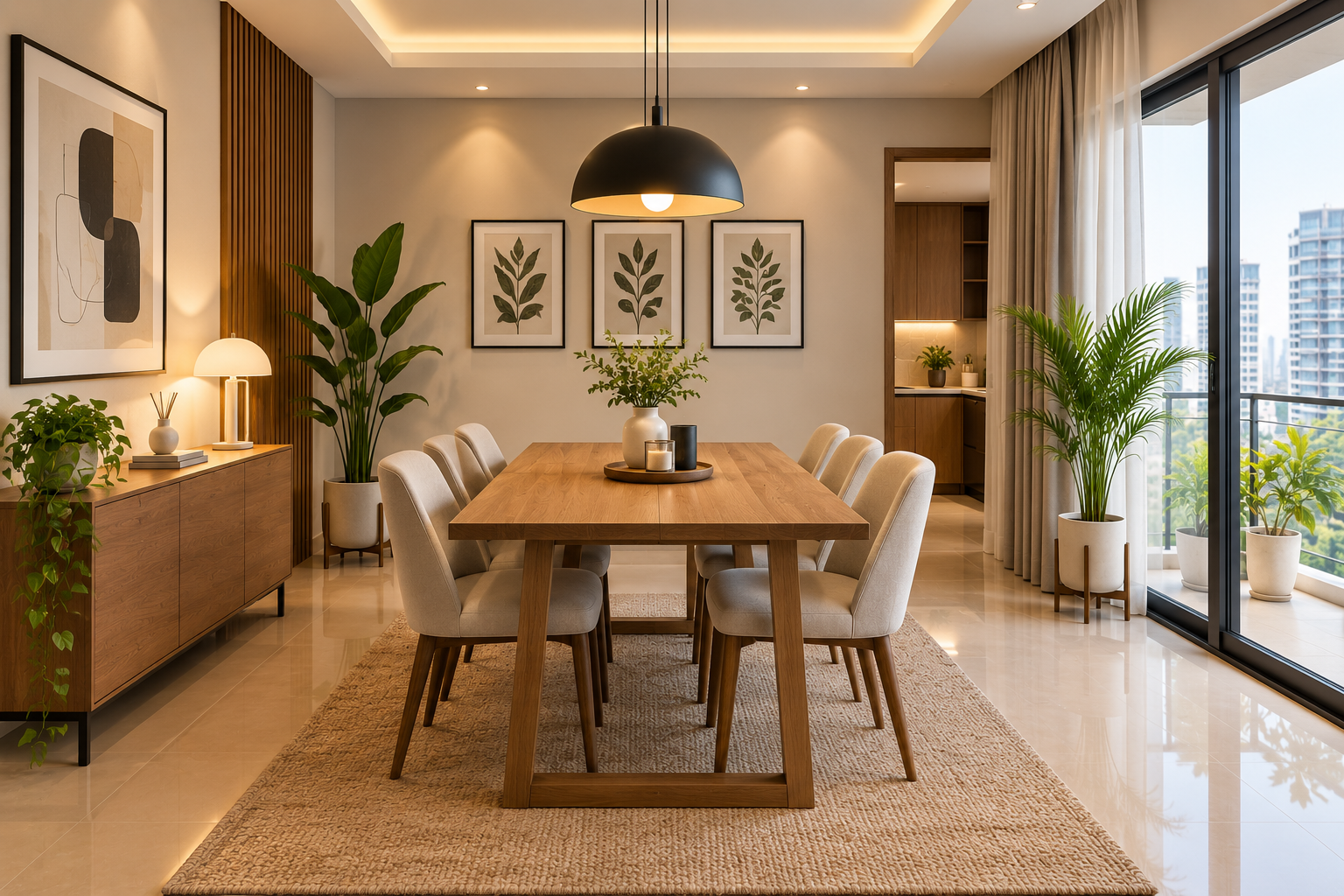
A modern dining area doesn’t have to be big to actually work, it just needs to feel intentional.
- Go with a simple wood or stone table, paired with a few sleek chairs. They don’t have to match either, mismatched chairs in a consistent color palette actually read as more curated, not less put together.
- Hang the pendant light a bit lower than you’d expect over the table. Instantly makes the whole space feel designed instead of just thrown there.
- If your dining area’s sharing space with the living room, pretty common in modern apartments, use a rug or some kind of clear furniture boundary to keep the two zones feeling like their own thing.
Small Space and Budget-Friendly Tips
- A modern dining area doesn’t have to be big to work well, it just needs to feel intentional.
- Go with a simple wood or stone table, pair it with a few sleek chairs. They don’t even need to match, mismatched chairs in a consistent color palette actually come off as more curated, not less put together.
- Hang the pendant light a bit lower than you’d expect over the table. Instantly makes the whole space feel designed instead of just thrown there.
- If your dining area’s sharing space with the living room, pretty common in modern apartments, use a rug or some kind of clear furniture boundary to keep the two zones feeling like their own thing.
Conclusion
Honestly, learning how to style a modern apartment comes down to a handful of decisions, made with some actual intention behind them. A clear design direction. A neutral base with a few accents placed exactly where they should be. Furniture that fits the space you’ve actually got, not just the space you wish you had. Layers of light and texture so nothing feels flat. None of this needs a full renovation or some crazy budget, just a bit of planning before you start buying stuff.
Get those basics right, and the rest, the artwork, the plants, all those small personal touches, tends to just fall into place on its own.
For more room-by-room design inspiration, explore our Interior Design coverage.
Frequently Asked Questions (FAQs)
-
What colors work best for a modern apartment?
Neutral tones like white, warm gray, beige, and taupe form the best base for a modern apartment, since they make rooms feel larger and brighter. Accent colors like deep green, navy, or terracotta can be added through pillows, art, or rugs.
-
How do I make a small apartment look modern?
Stick to a tighter color palette, use mirrors to bounce light around the room, and prioritize multi-functional furniture like storage ottomans or extendable tables. Keeping surfaces clear also makes a small space feel more open.
-
Do I need matching furniture for a modern apartment?
No. Modern apartment styling actually favors intentional mismatches, like dining chairs in a consistent color but different shapes, over furniture sets that look too uniform or showroom-like.
-
How many statement pieces should a modern apartment have?
Usually one or two per room. Too many bold pieces compete with each other and take away from the calm, edited look that defines modern apartment design.