

For a lot of people, real estate is attractive for one simple reason: it can bring in money over time without requiring you to sit in front of a computer every day.
That’s where passive income comes in. It isn’t the overnight-success story you often see online. In most cases, it’s about owning or investing in something that can keep producing income while you get on with the rest of your life. And you don’t necessarily have to become a landlord to get started.Rental properties are one option, but they’re far from the only one. REITs, real estate crowdfunding, and syndications give investors other ways to put money into the property market. Each one works differently, and the amount of money, time, and risk involved can vary quite a bit.
So, what does passive real estate income actually look like in practice? In this guide, we’ll go through 10 different ways people can potentially earn income from real estate. We’ll also look at a few of the mistakes that can make an otherwise promising investment much more difficult than expected.
Before getting into the details, there’s one thing worth mentioning. This article is intended for general information only and isn’t financial advice. Real estate investments carry risks, so it’s a good idea to research any opportunity carefully and speak with a qualified financial adviser if you need advice based on your own circumstances.
What Is Passive Income From Real Estate?
Passive income basically means having money come in without having to work for it day after day. In real estate, that could be the rent you collect from a tenant, dividends from a REIT, or interest earned on a loan backed by property. Once everything is set up, the income can keep coming in without you having to put in regular hours to earn it.
That said, “passive” is a bit of a loose term in this space. Some strategies, like owning a REIT, are about as hands-off as investing gets. Others, like owning a rental property, involve real work upfront and occasional maintenance down the line, even if a property manager handles the day-to-day. It’s worth going in with realistic expectations rather than assuming every option here means doing nothing at all.
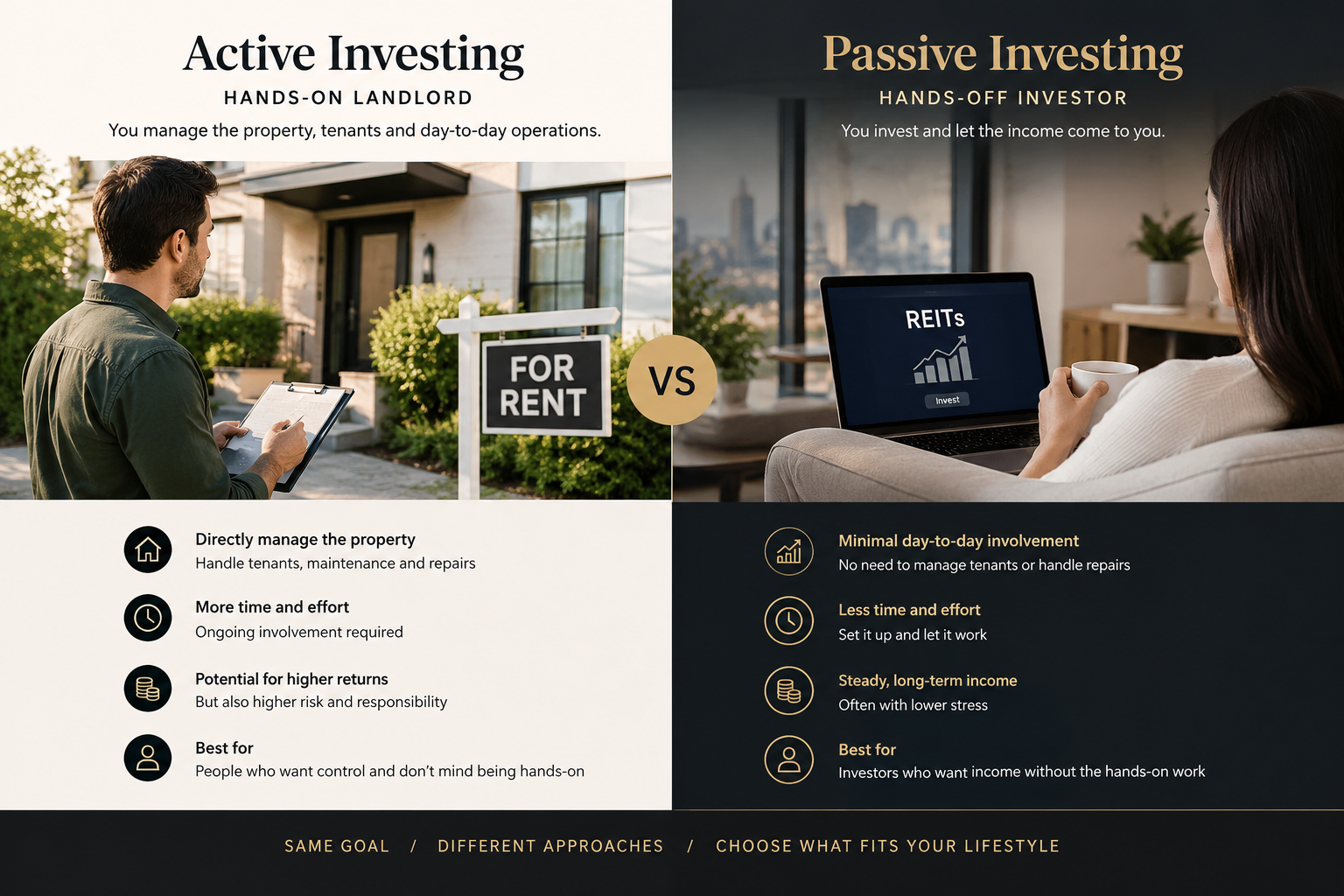
Active vs. Passive Real Estate Investing: What’s the Difference?
Active real estate investing basically means you’re in the driver’s seat, managing the property or the deal yourself. Buying a rental unit, screening your own tenants, handling repairs, flipping houses, that whole hands-on side of things. Can pay off more in the end, sure, but it eats up real time and takes actual expertise to do well.
Passive real estate investing flips that. Someone else, a property manager, a fund, a REIT, deals with the operational side while you just put in the capital and collect returns. Usually the returns are a bit lower than what hands-on investing brings in, but you’re also not spending hours managing anything, and you don’t need years of expertise to get started.
Most people, honestly, end up somewhere in the middle, at least when they’re starting out, before figuring out which side actually fits what they’re going for.
Benefits of Building Passive Income Through Real Estate
- Consistent cash flow. Rent and dividends tend to arrive on a predictable schedule, which makes budgeting and planning easier than income sources with less consistency.
- Appreciation potential. Real estate values tend to rise over time, so you’re often building wealth two ways at once: through income and through the property or investment itself gaining value.
- Diversification. Real estate doesn’t always move in the same direction as the stock market, which can help smooth out a portfolio during volatile periods.
- Tax advantages. Depreciation, mortgage interest deductions, and other real estate-specific tax benefits can meaningfully reduce what you owe, depending on how you’re invested and where you live. The IRS’s guide to rental property deductions breaks down exactly what qualifies.
- Lower time commitment than most active investments. Once set up, many of these strategies require just occasional check-ins rather than ongoing daily management.

11 Ways to Build Passive Income With Real Estate
1. Rental Properties
The classic route. You buy a property, rent it out, and collect monthly income after covering the mortgage, taxes, and maintenance. It’s more hands-on than most other options here, but hiring a property manager can shift a large chunk of the work off your plate, at a cost, typically around 8-12% of monthly rent.
-
Real Estate Investment Trusts (REITs)
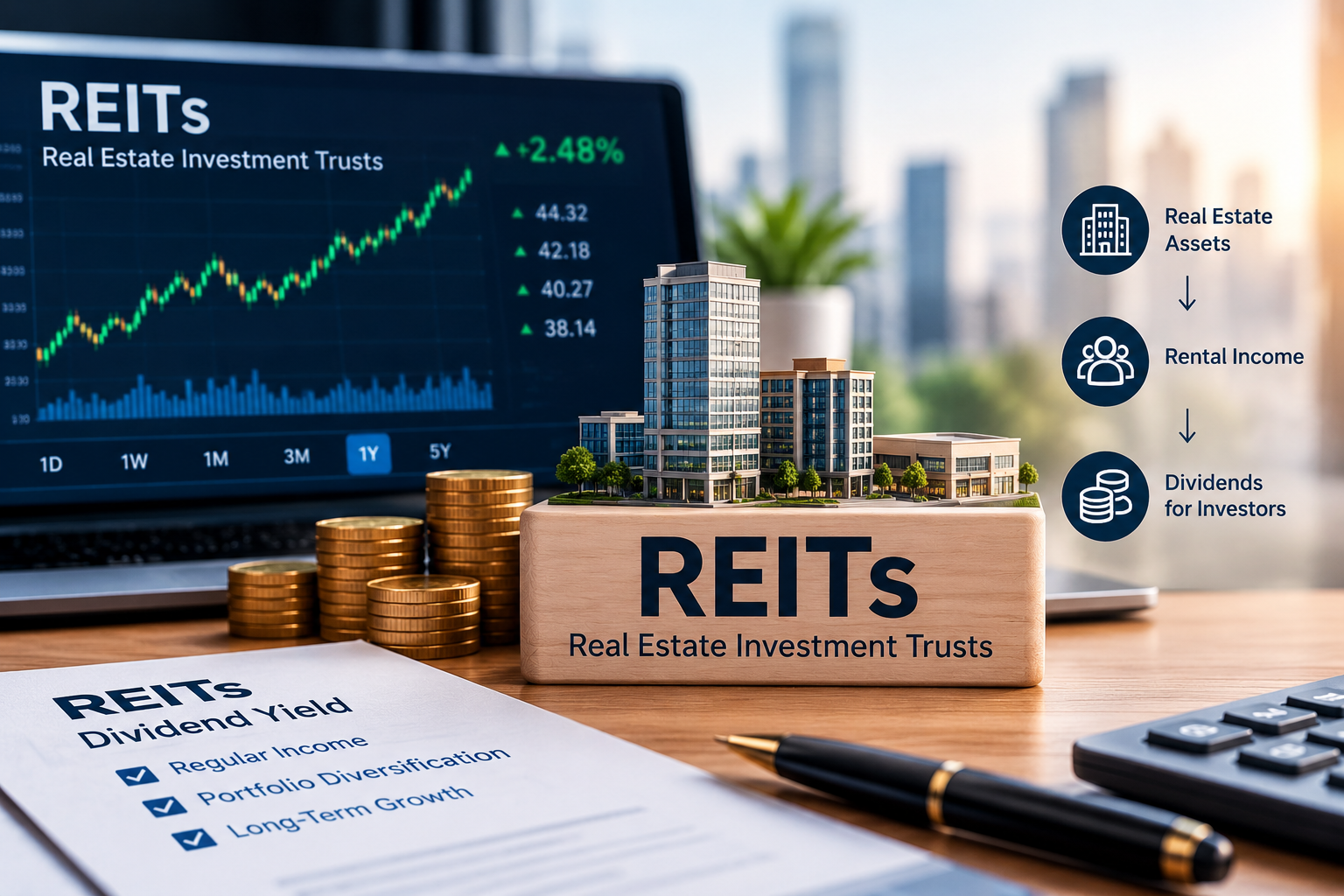
REITs are a way to invest in income-producing real estate without ever buying a property yourself. You buy shares, pretty much like buying stock, and the REIT pays you dividends from the rental income and profits it brings in. Publicly traded REITs are especially liquid too, you can buy and sell them just like any regular stock on the market, whenever you want. For a deeper breakdown of how REITs work and what to watch for, the SEC’s official REIT investor guide is a solid, unbiased place to start.
3. REIT ETFs and Mutual Funds
For even more diversification, REIT ETFs and mutual funds bundle multiple REITs into a single investment. This spreads your risk across different property types and markets rather than depending on the performance of one company or sector.
4. Real Estate Crowdfunding
Crowdfunding platforms pool money from multiple investors to fund specific real estate projects or portfolios, often with lower minimum investments than buying property outright. It’s a fairly accessible entry point, though it usually comes with less liquidity than publicly traded REITs, your money may be tied up for years depending on the platform and project.
5. Real Estate Syndications
Syndications work kind of like crowdfunding, but the deals are usually bigger and the minimum investments are higher too, often tens of thousands of dollars. A sponsor handles the property while investors just collect their share of the income and profits. These are typically reserved for accredited investors, so it’s worth checking the eligibility requirements before going down this route.
6. House Hacking

House hacking means living in one unit of a multi-family property (like a duplex or triplex) while renting out the others, or renting out spare rooms in a single-family home. The rental income can cover part or all of your mortgage, letting you build equity while significantly reducing your own housing costs.
7. Short-Term Vacation Rentals
Platforms like Airbnb and Vrbo have made short-term rentals a legitimate passive income strategy, especially in tourist-heavy areas. They tend to generate higher income per night than traditional long-term rentals, but they also require more active management, cleaning, guest communication, pricing adjustments, unless you hire a co-host or management service to handle it.
8. Real Estate-Backed Debt and Note Investing
Instead of owning property, you can lend money secured by real estate and earn interest, similar to being the bank. This includes private mortgage notes and real estate debt funds. Returns are often more predictable than equity investments, though they typically cap out lower than what you might earn from appreciation-driven strategies.
9. Hiring a Property Manager for Existing Rentals
If you already own rental property and want to make it more passive, hiring a property manager is often the simplest fix. They handle tenant screening, rent collection, maintenance calls, and day-to-day issues, turning an active investment into something much closer to hands-off, for a monthly fee.
10. Ground Leases
A ground lease involves leasing land to a tenant who then builds and owns the structure on it for the lease term. You collect steady rent on the land itself, often with very low maintenance responsibility, since the tenant typically handles the building and its upkeep.
Common Passive Income Mistakes to Avoid
- Underestimating expenses. Vacancies, repairs, property management fees, and taxes add up fast. Run the numbers conservatively before committing.
- Skipping the research on REITs and funds. Not all REITs perform the same. Check the underlying assets, management track record, and fee structure before investing.
- Over-leveraging. Taking on too much debt to acquire property can turn a passive income stream into a financial burden if the market shifts or vacancies rise.
- Ignoring liquidity needs. Some options, like syndications and crowdfunding, lock up your money for years. Make sure you’re not investing funds you might need access to sooner.
- Treating “passive” as “no effort.” Even the most hands-off strategies benefit from periodic check-ins, whether that’s reviewing a REIT’s performance or checking in with your property manager.
-
Wholesaling Real Estate
Wholesaling basically means putting a property under contract, often at a below-market price, then assigning that contract to another buyer for a fee, without ever actually owning the property yourself at any point. Needs little to no capital upfront, which makes it one of the more accessible ways into real estate, though it leans a lot more active than most other strategies here, since it depends on you consistently finding deals and buyers rather than just earning ongoing income from one investment.
How to Choose the Right Strategy for You
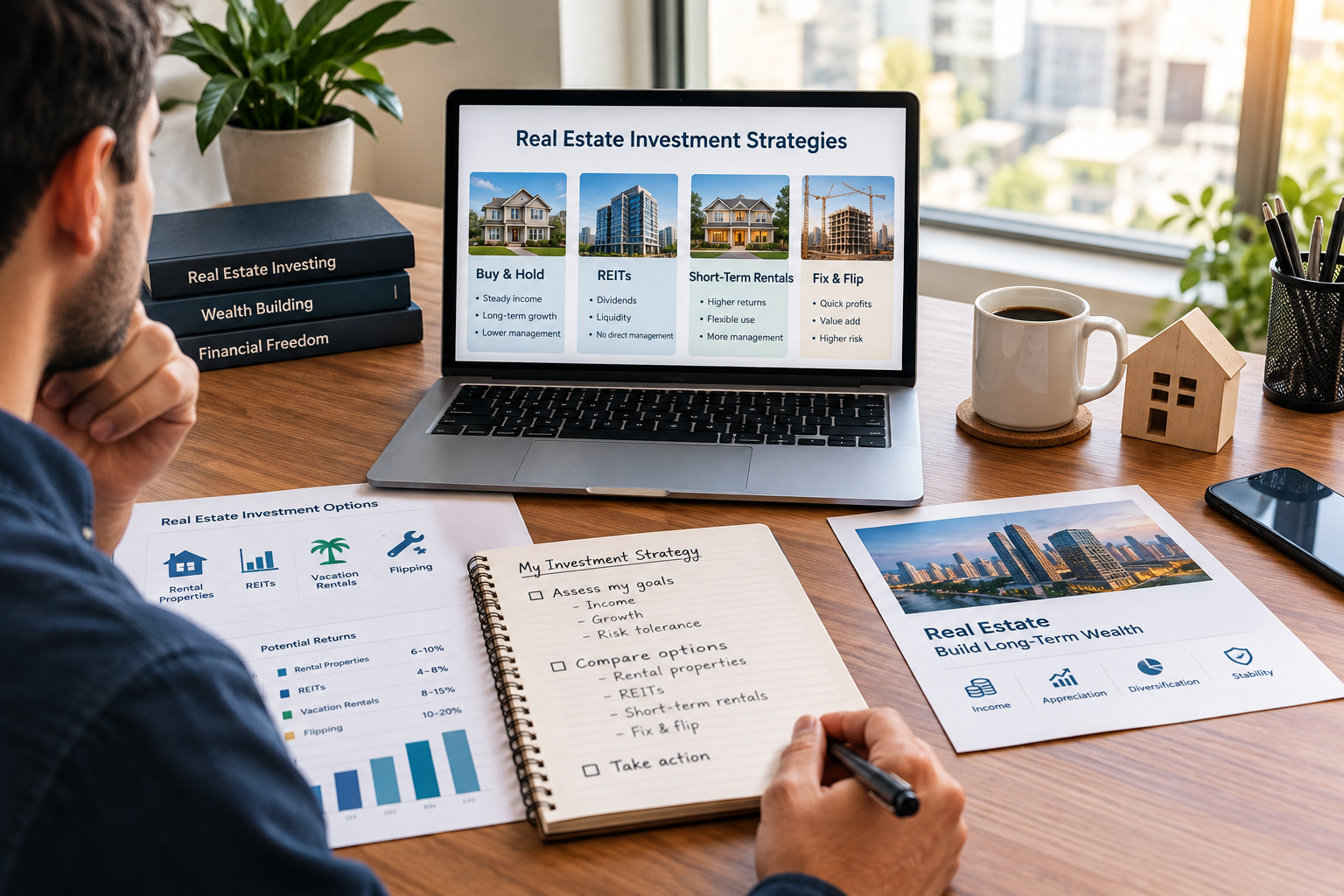
The right approach really depends on three things: how much capital you’re starting with, how hands-on you want to be, and how much liquidity you need. Someone with a smaller budget and no interest in managing tenants might start with a REIT or REIT ETF. Someone with more capital and a higher risk tolerance might look at rental property or a syndication instead. It’s rarely an all-or-nothing decision, plenty of investors mix two or three of these strategies as their portfolio grows.
Conclusion
Honestly, there’s no single “best” way to build passive income with real estate. It’s really just whatever fits your budget, your timeline, and how involved you actually want to be day to day. Maybe that’s starting small with a REIT, maybe it’s house hacking your way into that first rental, or eventually moving into syndications once your capital grows. The strategies above cover most of the paths people actually take to get there. The real key is starting with realistic expectations and picking a strategy that actually fits your situation, instead of chasing whatever just sounds the most passive on paper.
For more on building and managing real estate investments, explore our Property Investment coverage.
Frequently Asked Questions
-
How much money do you need to start earning passive income from real estate?
You can start earning passive income from real estate with as little as $10 to $500 through fractional investments, while physical property ownership typically requires $15,000 to $80,000+ in upfront capital. The exact amount depends entirely on whether you choose a completely hands-off digital method or traditional brick-and-mortar investing.
-
Is real estate passive income actually passive?
Direct real estate investing is not truly passive because owning and running a physical property requires ongoing labor and management, making it feel more like a part-time job.
-
What’s the safest way to earn passive income from real estate?
The safest way to earn passive real estate income is through Publicly Traded REITs (Real Estate Investment Trusts). They allow you to buy shares of property portfolios on the stock market, requiring zero landlord duties and providing high liquidity. While they carry market volatility risk, they eliminate the high capital requirements and vacancy risks of physical properties.
-
Can you make money in real estate with little to no money?
Yes, you can make money in real estate with little to no money. You can use active strategies like wholesaling, where you flip property contracts for a fee without buying the house, or house hacking, using low-down-payment loans to live in one unit while tenants pay the mortgage. Alternatively, you can invest as little as $10 in REITs or crowdfunding platforms for purely passive returns.
-
How do you build passive income with real estate online?
You can build passive income with real estate online by investing through digital platforms like REITs and crowdfunding websites without managing physical properties.
-
How can you generate passive income with no initial funds?
To generate passive income with no money, you must invest your time or skills instead. You can create and sell digital assets like templates, publish low-content books via Amazon KDP, or earn commissions through affiliate marketing. These options let you build content once and profit repeatedly with zero upfront costs.
-
How do you build passive income with real estate in the USA?
You can build passive real estate income in the USA by buying dividend-paying Public REITs via brokerage apps, pooling money into Crowdfunding platforms, or acquiring Turnkey rental properties that utilize professional third-party management companies to handle all daily operations. The best comprehensive resource to learn how to analyze and execute these different strategies is BiggerPockets, which offers free guides, forums, and articles for all investor levels.