

The properties people remember are never the ones with the longest amenities list. They’re the ones that told you what the house believed in before they told you what it had.
One room, explained in full. One material, and the reason for it. That is often doing more work than a complete inventory of finishes. I write brand language for luxury brands including, beauty, and design agencies. I’ve read enough listings and about pages to know most luxury brands have never shown the
difference between describing a property and making a case for it. That gap is where memorable brands separate from forgettable ones.

What specificity actually looks like
A property description that stays with someone starts in one place: a true, specific detail, not a summary. Not “chef’s kitchen with premium appliances,” but the actual reason that kitchen exists the way it does, who it was built for, what it was solving. Not “spa-inspired primary suite,” but the material chosen, and why that material, in that climate, for that owner.
Square footage tells a buyer what they’re getting. Specificity tells them what they’re joining.
For buyers exploring premium properties, understanding the key features and considerations behind a luxury home can make the difference between simply viewing a property and recognizing its true value.
An amenities list describes a container. A specific detail describes a decision. Buyers remember decisions, because a decision implies intention. Intention is the thing luxury is actually selling.
Why generic language costs more than it looks like
Generic and forgettable are the same thing wearing different names.
A standard property description gives you the room count. The finished package. The proximity to good schools or good marinas. Concessions to searchability, the keywords an algorithm expects. Stack all of that together and the property reads exactly like the one two doors down, similar floor plan, similar price.
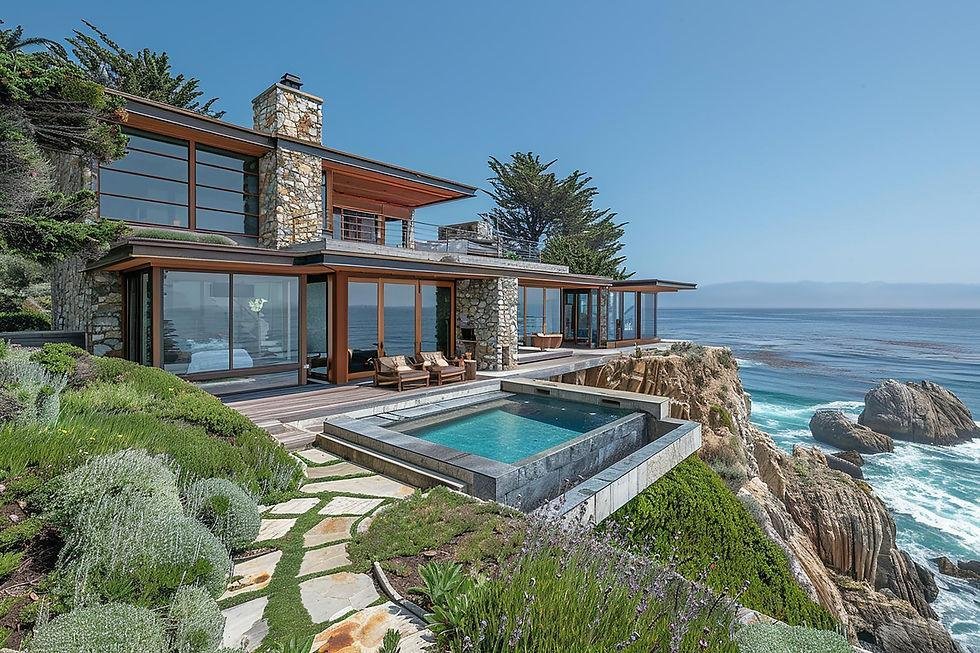
Take a genuinely distinctive coastal home. One with a real story behind its siting, its materials, its relationship to the land. Described generically, it competes on square footage against a hundred listings in its price band. Described with the actual reasoning intact, it stops competing. It becomes the only option in a category of one.
Generic language doesn’t erase a property’s value. But set the two versions beside each other, and the distance in memorability is wider than most teams assume.
A pattern across three kinds of property
The failure looks different depending on what’s being sold.
New construction leans entirely on finishes, the appliance brand, the stone selection, because there’s no history yet to draw from. Finishes alone rarely separate one high-end build from the next.
Renovations bury the most interesting decision, the actual constraint the architect solved, underneath a tally of square footage added. The story was never the total. It was the problem that got solved to reach it.
Historic restorations over-rely on age and provenance and under-explain what the current owner actually did with what they inherited. Buyers in this category want the present-day judgment, not just the history.
Different property, same fix. Name the decision. Not the category it belongs to.
Design studios make the same mistake
This isn’t only a real estate problem.
A studio writes “we specialize in timeless, elevated interiors” and says nothing at all. Every studio at this price point claims timeless and elevated. The ones that get remembered, the ones referred by word of mouth into rooms with real budgets, write about one philosophy, held consistently, defended even when it costs them a client who wanted something else.
A studio’s website copy is rarely the bottleneck on their talent. It’s the bottleneck on whether a stranger, three scrolls in, understands what they’d actually be hiring. Vague language asks a prospective client to guess. Specific language lets them recognize themselves, or correctly rule themselves out.
Where smaller developers get the order backwards
Smaller developers and boutique studios often treat specificity as something only an established name has earned, as if a newer brand needs the safety of familiar language until it’s proven itself.
It runs the other way.
An established name survives generic copy because reputation is already doing the work the language should be doing. A newer developer has no reputation to lean on yet, which means the language is the only signal available. Writing generically at that stage doesn’t protect the brand. It guarantees the brand disappears next to competitors with more history making the exact same vague claims.
The smaller the name, the more the specificity matters. Not the less.
This shows up constantly in how new developments get marketed in their first cycle. The instinct is to sound like the established names nearby, borrow their vocabulary, match their register, because that vocabulary reads as safe. But a buyer comparing a new development to an established one on the established one’s own terms will always favor the established one. The only way a newer name competes
is by refusing the comparison entirely, saying something the established brand has no reason to say, because it isn’t true of them the way it’s true of you.
A test that requires no marketing background
Read the copy back and ask one question: could this sentence describe the competitor down the street with only the address changed?
If yes, the copy is decoration. If a buyer or client could not mistake this description for anyone else’s, the copy is working.
Ask a second question. Is there a named, specific decision behind at least one claim, a material, a constraint, a philosophy, something that required an actual choice? Copy without a decision behind it has no spine. Rewrite it until it does.
A third check, less obvious than the first two: read the piece out loud. Language built entirely from atmosphere tends to fall apart when spoken, because there’s nothing underneath the rhythm to hold attention once the reader can hear the gaps. Language built on a real decision holds up read aloud, because a decision is a fact, and facts don’t need the sentence around them to do all the lifting.

Distinctive language versus decorative language
The difference rarely lives in the vocabulary. Decorative and distinctive copy often use nearly the same words, elevated, considered, intentional. What separates them is whether those words are earned by something specific underneath, or doing the entire job alone.
Distinctive copy explains its reasoning and reads the same whether or not the reader has ever seen the property. Decorative copy leans on adjectives, avoids anything that could be checked, and reads identically to the listing beside it with the nouns swapped.
A shorter description with one real detail outlasts a longer one built from atmosphere. Buyers remember what they could picture. They forget what only sounded expensive.
When amenity-forward language is the right call
Sometimes it is, and that’s not a failure of imagination. If a property or a studio’s entire value genuinely is the amenity package, the finish list, the proximity, leading with that is accurate.
Specificity earns its place where there’s a real point of view to defend, a design philosophy, a founder’s history, a material story, something a buyer would need explained to fully value. Read the draft back and ask whether a stranger could repeat the property’s core claim in their own words after one pass. If they can’t, the specificity isn’t there yet.
Questions worth asking before you publish
Is specific language always better than a full amenities list? Not always. A complete list still belongs in disclosure documents and MLS listings, where buyers need full information regardless of how it reads.
The distinction matters in marketing copy, where the goal isn’t disclosure. It’s memorability, and memorability is built on specificity, not completeness.
How much detail is too much?
The test isn’t length. It’s whether every detail is doing work toward one clear impression, or just accumulating facts. One chosen detail outperforms five generic ones.
What does a smaller developer need before writing this way?
A willingness to name an actual point of view and hold it, even where it narrows the buyer pool. A copywriter working in this register regularly helps find that point of view. It rarely needs to be invented from nothing.
Will this narrow my buyer pool?
Often, and that’s the intent, not a cost. Specific language filters out buyers who were never the right fit and sharpens recognition for the ones who are. Language written to appeal to everyone is remembered by no one.
Does this apply to listing copy meant for search and syndication?
Mostly not. MLS listings have their own functional conventions, and rewriting them for atmosphere tends to backfire. The opportunity lives downstream, in everything a buyer reads once they’re already interested.
What if the founder doesn’t think their own story is interesting?
Almost every founder underestimates their own specificity, because the decision felt obvious to them at the time. The detail usually surfaces by asking what they almost did differently, and why they didn’t. The road not taken is where the real point of view tends to live.
Allison Sharp is the founder of The Brand Copy, a strategic brand agency working with luxury and premium brands on positioning and language, and the publisher of The Encounter, a publication read by a premium and luxury audience.