
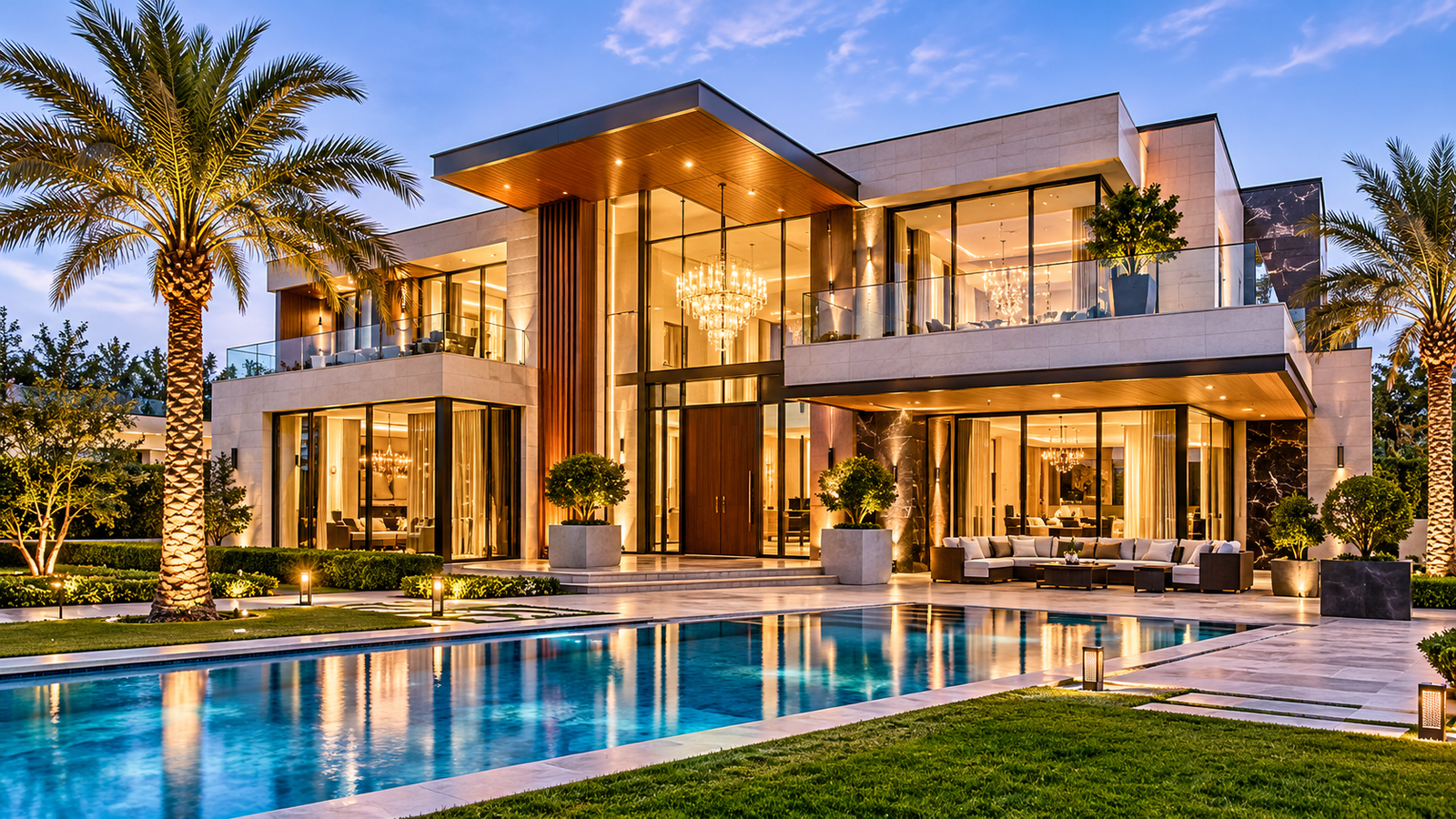
The luxury housing market in 2026 is not slowing down. It is changing shape. Buyers with the means to close on a seven-figure property are still out there, still searching, and in many markets still outbidding each other. What has shifted is how long they take to say yes, and how much they expect in return for that signature.
According to Coldwell Banker’s 2026 Mid-Year Luxury Report, prospective buyer interest in U.S. luxury real estate roughly doubled in the first five months of the year, with global search activity for American luxury property climbing by 100% over the same period. That is not a market cooling off. That is a market where more people are watching, comparing, and waiting for the right fit before they move.
At the same time, agents working this segment describe a buyer who takes longer to commit, asks sharper questions, and walks away from anything that feels overpriced. The result is a market that looks active from the outside but behaves very differently once a deal actually gets underway.
The buyer pool hasn’t shrunk, the patience has
Demand data backs this up clearly. Redfin’s analysis of the three months ending May 31, 2026, found that luxury pending sales rose 5.2% year over year nationally, the largest gain since December 2024. Luxury new listings were up 1%, while non-luxury listings actually declined. Buyers are showing up. Sellers are listing. The pipeline is moving.
But it is moving slower. Median days on market for luxury properties reached 49 days, five days longer than a year earlier. In some metros the delay is far more pronounced. Miami’s luxury segment saw median time on market jump by 24 days, pushing the figure to 150 days, the highest of any major metro tracked. Las Vegas and Nassau County, New York followed a similar pattern, each adding close to three weeks of extra time on market.
This is not a sign that demand is weak. It is a sign that buyers at this price point are no longer rushing. A few things are driving that shift:
- Affluent buyers have more properties to compare than they did two years ago, since luxury active listings nationally ticked up 0.4% even as overall inventory stayed tight in many coastal markets.
- Mortgage rate pressure that squeezed the broader housing market barely touches this segment. Nearly two-thirds of Coldwell Banker’s surveyed Luxury Property Specialists reported more all-cash purchases in 2026, up from 51% the year before.
- Buyers increasingly treat a luxury purchase as a long-term asset decision rather than a lifestyle impulse. Coldwell Banker found that nearly half of specialists said clients now view luxury real estate as a safe-haven investment, a notable jump from prior years.
That last point matters more than it might seem. When a buyer is deciding where to park serious capital, not just where to live, they slow down. They want the numbers to make sense, not just the view from the terrace.
Price it right the first time, or watch it sit
Pricing mistakes are costing sellers real time this year, and the data shows exactly how. Metros where sellers held firm on asking prices saw listings linger. Las Vegas, for example, posted one of the largest luxury price gains nationally at 13.7% year over year, yet its median days on market still rose by 23 days. That combination, rising prices alongside slower sales, tells agents something specific. Buyers are willing to pay, but only when the number feels justified from day one.
Florida markets illustrate the opposite pattern. Tampa’s luxury prices climbed 15.6% year over year while pending sales jumped 20.8%, among the strongest in the country. West Palm Beach and Miami showed similar strength in pending activity. The common thread across these faster-moving markets is realistic initial pricing paired with genuine scarcity, not inflated listings hoping a buyer will negotiate down.
An overpriced luxury listing does not just sit quietly. It actively signals to serious buyers that the seller is testing the market rather than committing to a sale, and in a segment where most buyers now compare several properties before acting, that signal gets noticed fast.
What’s actually swaying a yes today
Price and location used to be the whole conversation. Not anymore. Buyers closing on luxury homes in 2026 are weighing a longer list of priorities before they commit, and lifestyle fit now sits near the top of that list.
Several factors are showing up repeatedly in how affluent buyers describe what they want:
- Wellness features, including dedicated fitness spaces, spa-style bathrooms, and access to outdoor recreation, have moved from nice-to-have to expected in many luxury listings.
- Privacy has become a measurable value driver, not just a preference, particularly as buyers compare properties with direct sightlines to neighbors against those without.
- Multigenerational living is shaping floor plan demand, with buyers asking for separate suites, private entrances, or guest houses that can accommodate aging parents or adult children.
- Aging in place is influencing single-story layouts and accessible design even among buyers decades away from needing them, because resale value now factors in that flexibility.
Nearly 64% of luxury single-family inquiries in 2025 sought homes with five or more bedrooms, a figure that points directly at multigenerational and lifestyle-driven buying rather than simple square footage chasing. A bigger home, in other words, is rarely just about space anymore. It is about who else might live there, and for how long.
Landmaxxing: the shift toward land, space and privacy
Coldwell Banker’s Global Luxury team gave this trend a name in its 2026 Mid-Year Report, calling it landmaxxing. The term describes affluent buyers acquiring neighboring properties, oversized lots, or additional acreage specifically to expand privacy, protect views, and create room for multigenerational family compounds. It ranked as the number one trend among luxury buyers this year.
The scale at the very top of the market makes the pattern obvious. Ken Griffin, founder of Citadel, built a 27-acre compound in Palm Beach, Florida for roughly $450 million. Jeff Bezos spent more than $230 million acquiring properties on Miami’s Indian Creek Island. These are extreme examples, but the underlying behavior is showing up well below the billionaire tier too.
Search data confirms it is not an isolated phenomenon. Searches for unique properties, including estates, chateaux, historic homes, branded residences, and private islands, rose 146% year over year. Land searches specifically climbed 97%. Mary Lee Blaylock, president of Coldwell Banker Affiliates, summed up the logic behind the trend simply. A luxury home can be built almost anywhere, but land itself is finite, and that scarcity is exactly what is pulling buyers toward acreage over square footage.
The wealth transfer is already reshaping demand
A generational shift in who holds real estate wealth is underway, and it is large enough to influence buyer behavior for years to come. According to Coldwell Banker’s 2026 Trend Report, Gen X and millennials will begin inheriting $4.6 trillion in real estate globally over the next decade, with the United States accounting for 52% of that transfer.
This is not abstract. Global high-net-worth wealth has grown nearly 40% over the past six years, and real estate now makes up 29.4% of that wealth. Within the U.S., the bulk of the coming property transfer, about 65.7%, is expected to come from households with $5 million to $30 million in net worth rather than from billionaire estates. That detail matters because it suggests the shift will touch a broad swath of upper-income luxury buyers, not just a handful of ultra-wealthy families.
Michael Altneu, vice president of the Coldwell Banker Global Luxury program, described this incoming generation as inheriting historic wealth while approaching luxury with intention rather than impulse. That framing lines up with the broader pattern already visible in 2026 data: younger high-net-worth buyers researching more, comparing more, and buying with longer-term goals in mind.
Spending patterns back this up. Among buyers with $30 million or more in net worth, home-related spending is expected to outpace spending on personal luxury goods by 18.5%. Real estate, for this generation, is increasingly the primary luxury purchase rather than one line item among many.
Cash still talks
While rising mortgage rates have reshaped decision-making across most of the housing market, the luxury segment is largely sidestepping that pressure, and the financing data makes the reason clear. Nearly 63% of Coldwell Banker’s surveyed Luxury Property Specialists reported more all-cash purchases in 2026, up sharply from 51% the year before.
That shift changes the dynamics of a deal in ways financing-dependent buyers cannot match. A cash buyer is not waiting on rate locks, appraisal contingencies tied to loan approval, or the kind of financing fallthrough risk that can stall or kill a transaction. For sellers, that reliability is increasingly part of what makes an offer attractive, sometimes even more than the price itself.
Confidence figures track closely with the cash trend. 78% of specialists reported feeling confident in the health of the luxury housing market in 2026, up from 59% the previous year, and over 82% said their clients are maintaining or actively increasing their real estate holdings. Luxury buyers, in short, are not just able to pay cash. Many of them believe now is the right time to be adding to their portfolios, not retreating from them.
Where the global money is landing
International interest in U.S. luxury real estate is not a side trend in 2026, it is one of the clearest signals in the data. Global buyer searches for American luxury property rose 100% in the first five months of the year, matching the overall doubling in domestic buyer interest.
Three states are absorbing most of that international attention. California drew the largest share of international buyer inquiries nationwide, with New York and Florida following close behind. New York, notably, posted the fastest growth rate in international interest of any state tracked, suggesting renewed appetite for the kind of trophy properties and urban luxury the state is known for.
This international demand is layering on top of an already competitive domestic market, and it helps explain why inventory has stayed tight even as interest climbs. Luxury inventory fell year over year nationally, with many affluent homeowners choosing to wait for more economic certainty before listing. Close to 60% of specialists expect that inventory picture to loosen somewhat in the second half of 2026, though whether that happens fast enough to meet demand from both domestic and international buyers remains an open question.
What this means if you’re buying or selling luxury right now
None of these trends point to a luxury market that is slowing down. They point to one that has become more deliberate. Buyers in 2026 are patient because they can afford to be, informed because the data is more accessible than ever, and selective because they increasingly see a luxury purchase as a long-term financial decision rather than a lifestyle splurge.
For sellers, the practical takeaway is straightforward even if the market itself is not. Price strategically from the start rather than leaving room to negotiate down. Highlight privacy, land, and lifestyle features as seriously as square footage and finishes. And recognize that a cash-ready, well-researched buyer in 2026 is not moving slowly because interest is low. They are moving slowly because the stakes, and the amount of wealth now flowing into this segment, have genuinely gotten bigger.
Frequently asked questions
Is the luxury real estate market slowing down in 2026?
No. Buyer interest roughly doubled in the first five months of 2026 according to Coldwell Banker, and luxury pending sales rose 5.2% year over year nationally. What has slowed is the pace of decision making, not the volume of demand.
Why are luxury homes taking longer to sell in 2026?
Buyers are comparing more properties before committing, and many are treating a purchase as a long-term investment rather than a lifestyle decision. Overpriced listings are also sitting longer, since buyers now walk away from anything that feels aspirational rather than justified.
What is landmaxxing?
Landmaxxing is Coldwell Banker’s term for affluent buyers acquiring neighboring lots or additional acreage to expand privacy, protect views, and create space for multigenerational living. It was named the top luxury buyer trend of 2026.
Are luxury buyers mostly paying cash in 2026?
A large share are. Nearly 63% of Coldwell Banker’s surveyed Luxury Property Specialists reported more all-cash purchases in 2026, up from 51% a year earlier, which insulates many luxury deals from mortgage rate pressure.
Which states are seeing the most international luxury buyer interest?
California leads in total international buyer inquiries, followed by New York and Florida. New York posted the fastest growth rate in international interest among all states tracked in 2026.